
LayerZero
Airdrop Discovery & Tracking Platforms →LayerZero provides cross-chain messaging, token-transfer, and interoperability infrastructure.
Platform overview
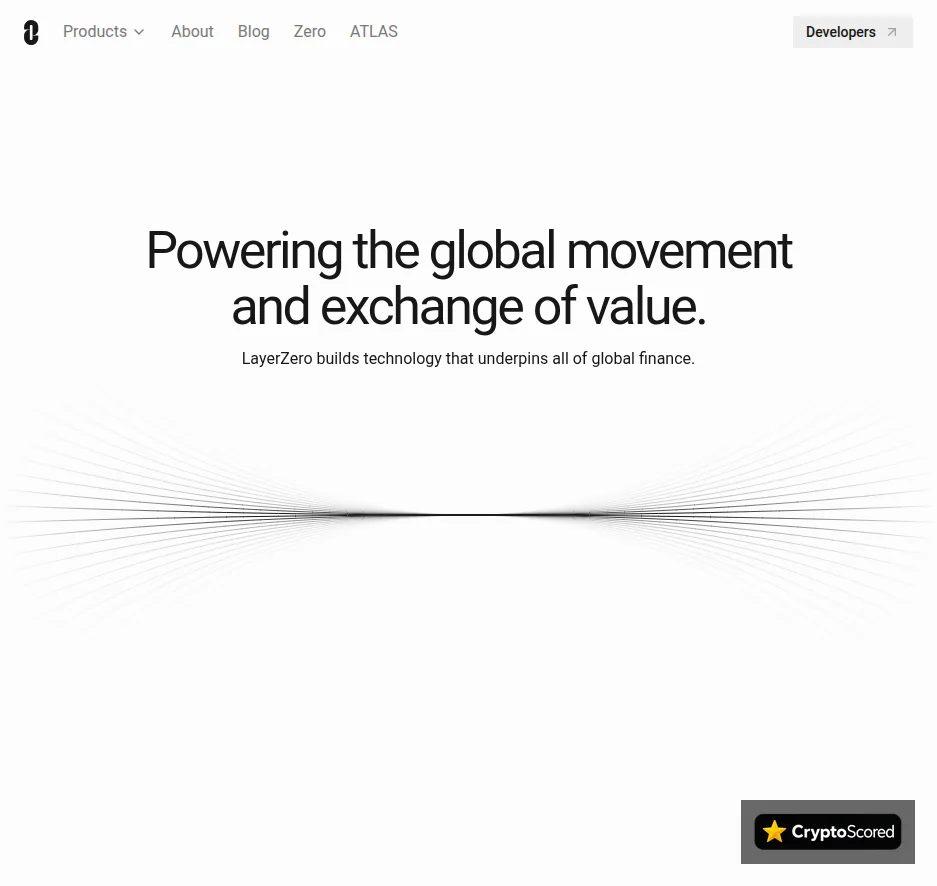
LayerZero is omnichain messaging infrastructure for applications, rather than a single bridge where users deposit one token and receive another. An application can use its Endpoint contracts for contract instructions, cross-chain reads, NFTs, or token transfers, so the product a user encounters is usually a LayerZero-powered app with its own routes and token rules.
Endpoints deliver messages between named OApps
A source OApp sends a payload through its local Endpoint. Once it has been verified on the destination, that Endpoint calls the receiving OApp, which defines what happens next. Connected endpoints alone do not make every application or token available: each directional route needs the relevant OApp peers and settings.
The Omnichain Fungible Token standard turns this delivery path into a unified token supply. A native OFT normally burns on the source chain and mints on the destination. An OFT Adapter instead locks an existing ERC-20 and releases locally held tokens, making its route dependent on the adapter's custody and available balance.
DVNs verify while Executors deliver
LayerZero separates proof from delivery. The OApp selects a Message Library and Decentralized Verifier Networks, or DVNs, for each route. A message becomes ready only when every required DVN and the chosen threshold of optional DVNs have attested to its payload hash.
An Executor then calls the destination OApp using fees and destination gas supplied with the source transaction. An app can use a default Executor, another provider, its own service, or manual delivery. That split means an Executor cannot create an unverified message, but automatic delivery can be delayed if the chosen Executor is unavailable.
Route settings are part of the product
OApp owners set peers, DVNs, confirmation depth, libraries and execution options separately for each direction. They can also pin those settings instead of inheriting defaults that may vary by route. Two apps using LayerZero can therefore offer very different verification and delivery arrangements.
A token transfer may also include a later destination call. The token receipt and that composed call have separate outcomes, so a failed follow-on action does not necessarily undo the received token. This is useful for linked cross-chain actions, but the application needs to handle both states.
Messaging infrastructure beside finished bridges
Axelar and Wormhole are close choices for teams building cross-chain contract calls and token flows. LayerZero's particular distinction is that an OApp chooses its own compatible DVN set and delivery arrangement for each route rather than relying on one shared verifier arrangement.
Stargate is the more direct option when the job is simply moving a supported asset through a finished transfer product. It uses LayerZero messaging but adds its own asset routes and liquidity design. LayerZero is for the team defining the OApp, token representation and route; Stargate is for a user taking an available transfer route.
Contact Information
- Website
- https://layerzero.network/
- Official support Discord
- https://discord.gg/ktbvm8Nkcr
User Reviews
No reviews yet. Be the first to review this platform.
Other Airdrop Discovery & Tracking Platforms







Explore the Crypto Directory
Discover exchanges, wallets, casinos, mining, trading tools and more.