


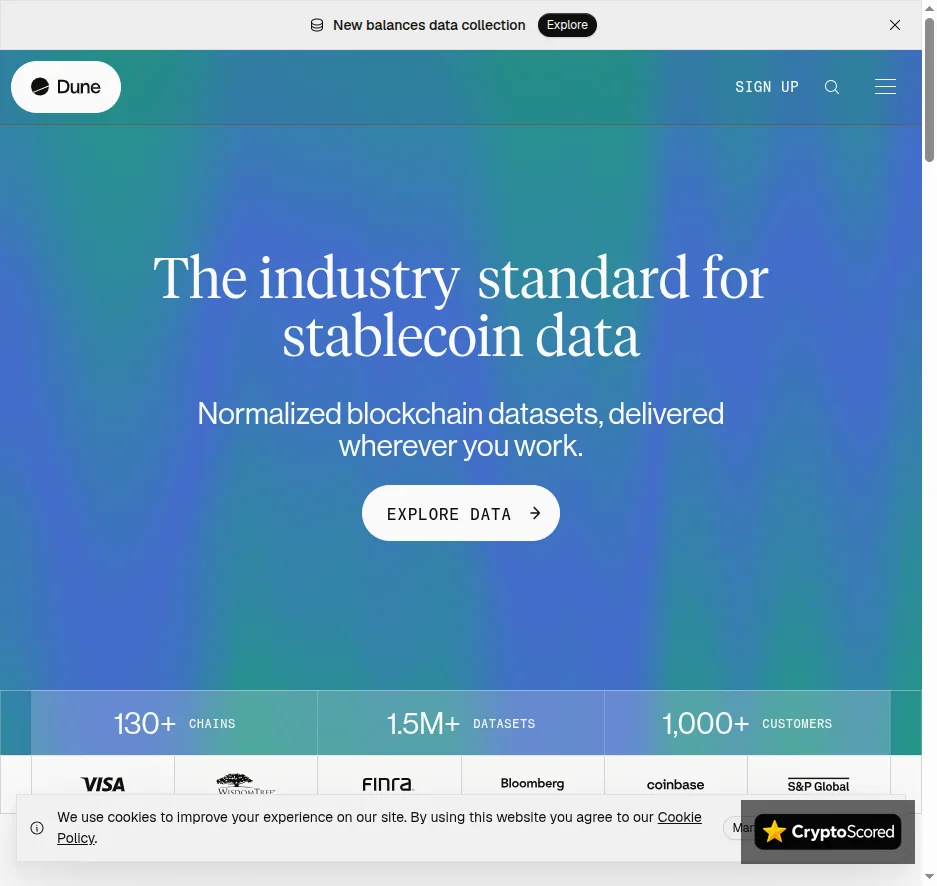
Dune is an on-chain analytics platform.
Verified Facts
- Onchain · Analytics Features
- LABELS, FLOWS, DASHBOARDS
Platform overview
Dune is a SQL-first onchain data platform for exploring cataloged blockchain data, defining a metric in a query and turning its output into visualizations, dashboards, schedules, alerts or application inputs.
The catalog provides several layers of queryable data
Dune’s catalog covers raw blockchain tables, decoded contract data and curated datasets, as well as partner, community and uploaded data. Curated datasets normalize selected information across chains into consistent schemas, while labels and entity-attribution collections are one data family that can be joined to transfers and protocol data.
The catalog covers more than 100 blockchains through the Data Hub, Data API and Datashare. Collections include centralized-exchange addresses, deposit addresses, flows, ENS labels and the wider Labels collection, but catalog visibility alone does not guarantee access to query a gated table.
SQL is the center of the analysis workflow
The query editor supports SQL authoring, autocomplete, syntax highlighting, inline errors, result inspection, visualizations, parameters, query privacy settings and version history. Queries can be scheduled, exported as CSV, materialized as reusable tables, run through execution APIs, connected through Trino or incorporated into dbt workflows.
That makes custom SQL, data-model design and refresh configuration part of producing a tailored answer. The platform is for defining and reproducing a metric, not only looking up a prebuilt wallet profile.
Queries become dashboard widgets and monitored outputs
A dashboard combines query visualizations with text widgets and can be manually refreshed or scheduled at a chosen frequency and execution tier. Query alerts notify users when results meet configured conditions.
The relationship is explicit: catalog tables feed a query; a query produces results and visualizations; visualizations become dashboard widgets; schedules, materialized views and alerts keep or monitor the resulting metric over time. A dashboard is not automatically current unless it is run or scheduled.
Access and freshness vary by layer and entitlement
Datasets can be public or gated. Raw and decoded chain data, selected transfer tables and many curated datasets are public, while specialized datasets can require an active workspace entitlement; programmatic query execution is credit-based while metadata endpoints are free.
Raw data typically arrives within minutes of onchain finality, while curated datasets refresh hourly. The selected data layer therefore determines time sensitivity, and an analysis needs to account for that boundary rather than assume every result has the same freshness.
Nansen is the labeled-investigation alternative
Dune fits analysts and data teams that need bespoke cross-chain metrics, reproducible SQL and reusable data pipelines, including workflows that combine labels with raw, decoded, curated, partner, community or uploaded data. It provides analytical primitives, not Nansen’s primary workflow of beginning in proprietary Smart Money and wallet-investigation views.
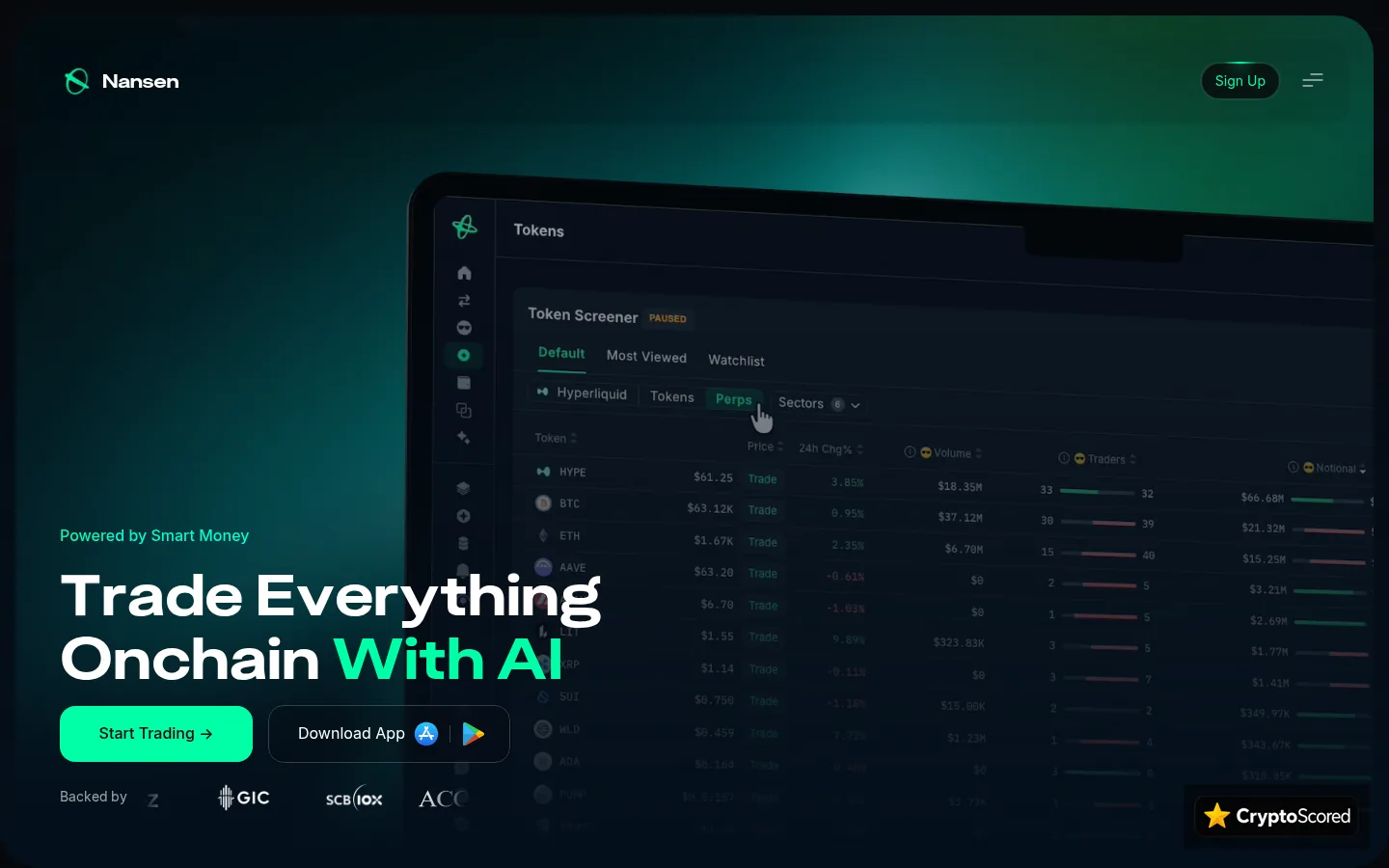
Nansen is the closer choice when labeled wallet entities, cohort flows, prebuilt investigative dashboards and event monitoring matter more than designing the analysis in SQL. The practical distinction is question-first, query-driven analysis versus subject-first investigation around labeled participants.
Contact Information
- Website
- https://dune.com/
- Contact us
- https://dune.com/contact
User Reviews
No reviews yet. Be the first to review this platform.
Other On-chain Analytics Platforms







Explore the Crypto Directory
Discover exchanges, wallets, casinos, mining, trading tools and more.