

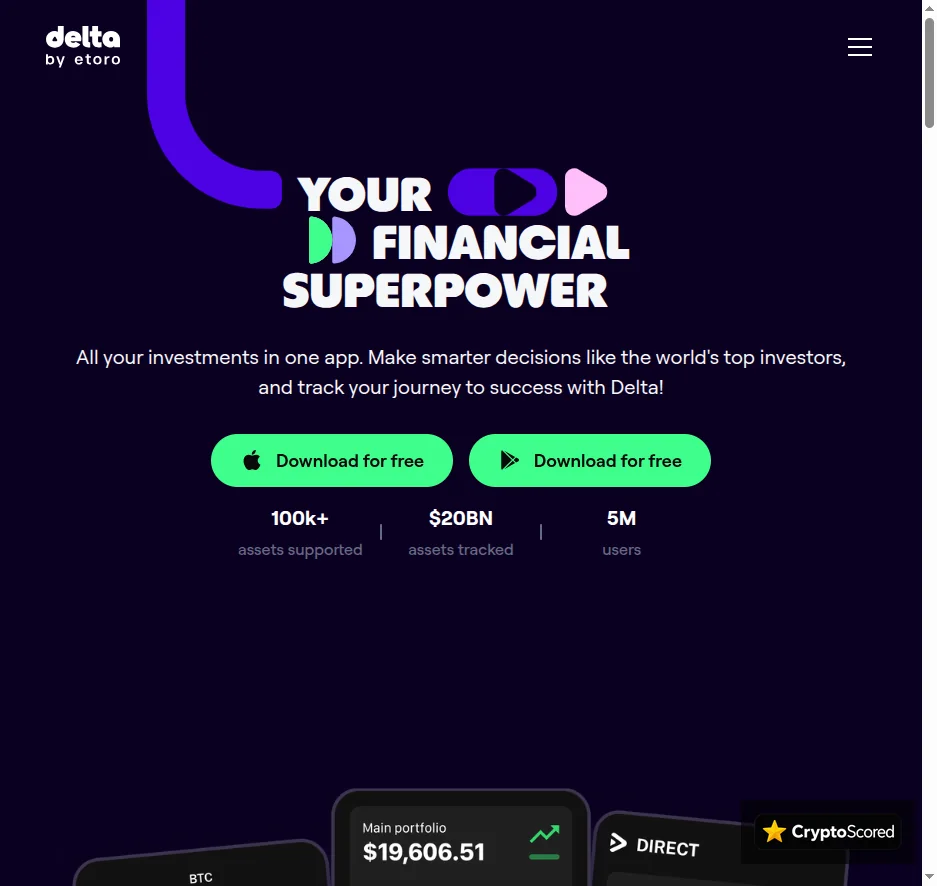
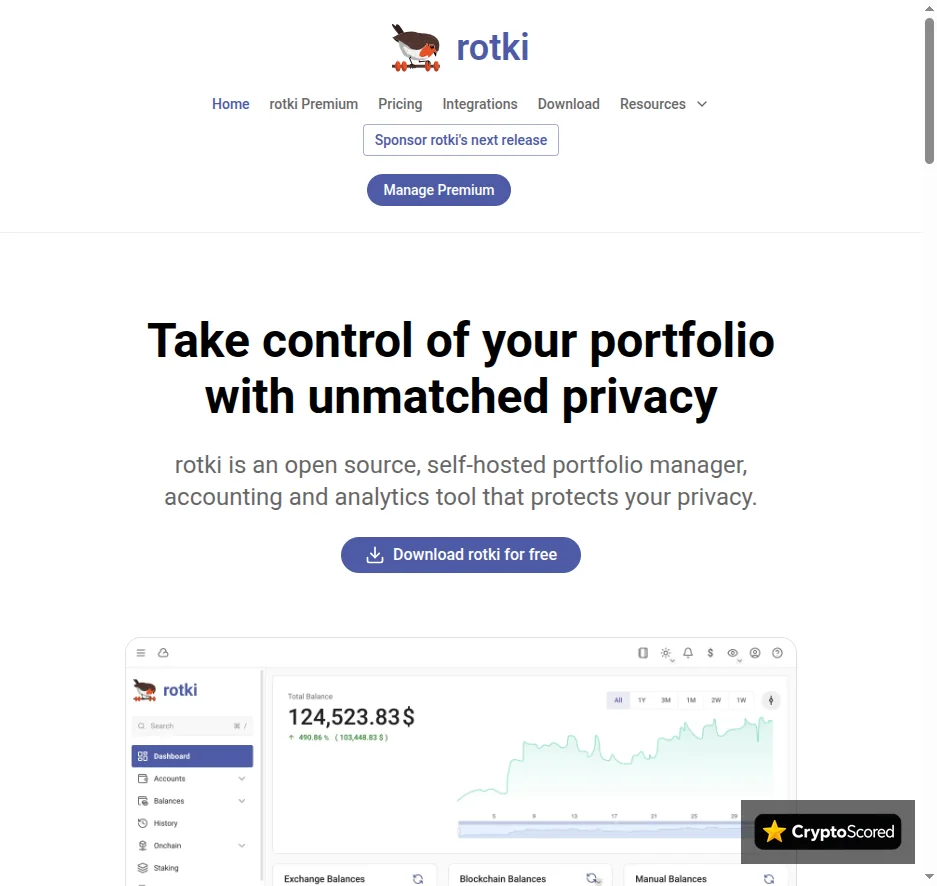
rotki is an open-source tool for tracking crypto portfolios, accounting, tax reporting, and alerts.
Verified Facts
- Portfolio · Sync Sources
- CSV, EXCHANGE, WALLET
- Portfolio · Reporting Features
- PERFORMANCE, TAX, ALERTS
Platform overview
rotki is a local-first, open-source crypto portfolio, accounting and tax-reporting application. Its ordinary working record is an encrypted database on the user’s machine, so the core trade-off is local control and local responsibility rather than a hosted portfolio login that automatically follows the user between devices.
A local profile separates portfolio data from the premium account
Creating a rotki profile creates local encrypted files protected by the profile password. A rotki.com account manages a premium subscription; it is not the normal cloud account that holds the portfolio. That distinction matters during recovery and migration: the local password remains necessary to open a restored encrypted database.
Premium backup and multi-device sync are optional and disabled by default. When enabled, the encrypted user database can be restored with subscription credentials and the same local password, but rotki’s global database of assets, address-book data and historical prices does not travel in that sync and may need to be moved separately.
Accounts, addresses and imports build the holdings record
Supported exchange accounts use read-only API credentials, with the required key, secret and sometimes passphrase varying by venue. A user can enable or disable synchronization, but frequent pulls remain subject to the exchange’s rate limits and possible IP-ban risk. Public blockchain accounts are tracked by address, or by a Bitcoin or Bitcoin Cash extended public key for address discovery without spend authority.
Balances come from connected exchanges, connected addresses and manual balances; adding history events alone does not set a current holding. CSV imports can fill an unsupported-connection or history gap, while collected exchange and onchain activity is decoded into events that can be supplemented by custom events and accounting-rule edits. Missing source data, RPC or indexer problems, exchange-specific limitations, and unsupported margin or futures history can leave the record incomplete.
rotki vs Delta: local control, optional sync and source coverage
Historic fiat values use rotki’s stored price for the asset and event timestamp; a user can override an incorrect or missing historic price. Profit-and-loss accounting, tax reports and CSV event-history export are outputs of that event record, so a price override or event correction should be made before relying on the resulting report.
rotki is the privacy- and local-control alternative to Delta. Delta centralizes portfolio data under one login and synchronizes it across devices, whereas rotki keeps the primary database local and makes encrypted premium sync a deliberate option. rotki’s model suits someone willing to manage local files and source coverage; Delta better fits a cloud-synced dashboard workflow.
Contact Information
- Website
- https://rotki.com/
- General contact
- info@rotki.com
User Reviews
No reviews yet. Be the first to review this platform.
Other Crypto Portfolio Trackers








Explore the Crypto Directory
Discover exchanges, wallets, casinos, mining, trading tools and more.