

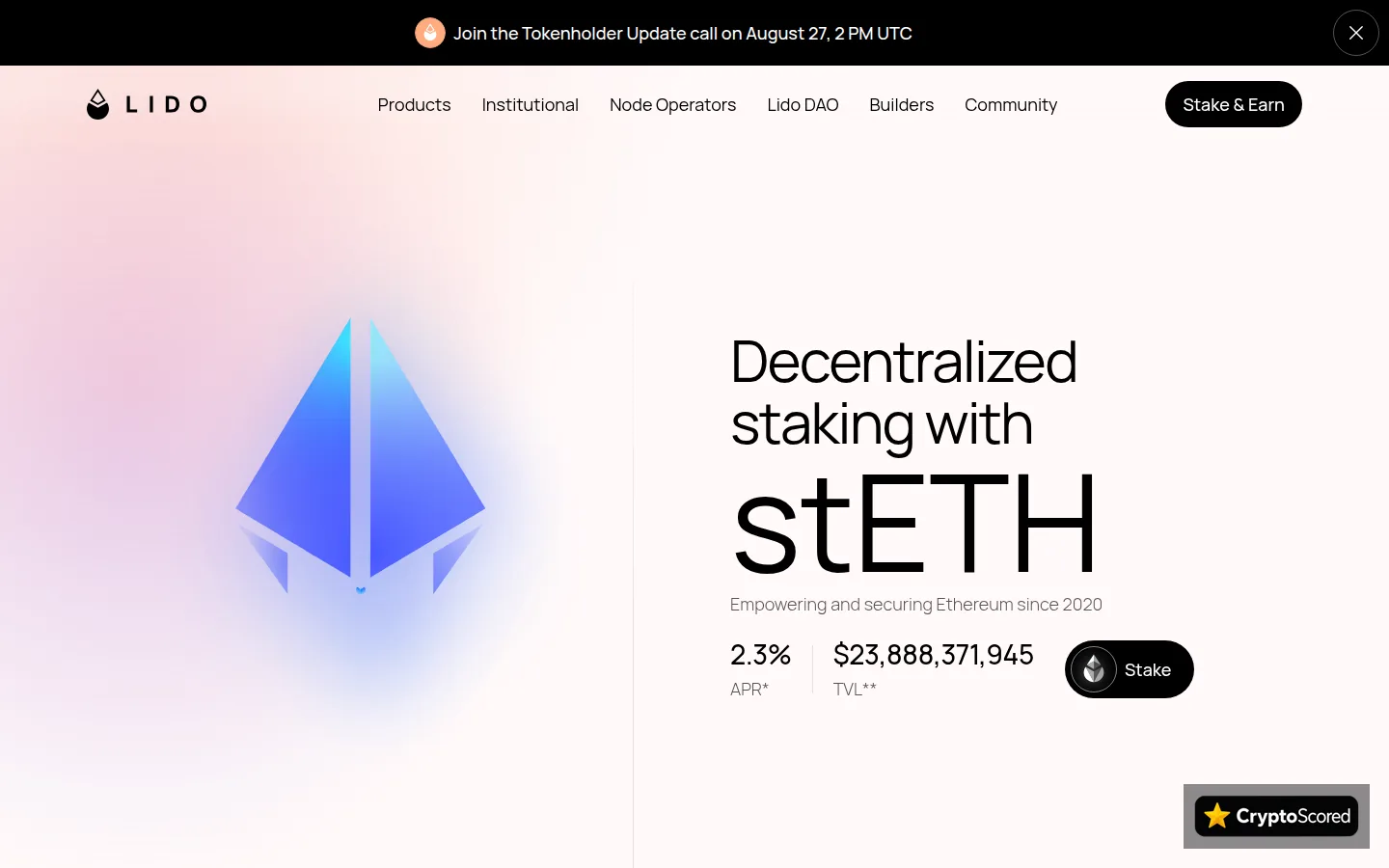
Lido is a liquid-staking protocol that lets users stake supported crypto assets while receiving a liquid token.
Verified Facts
- Staking · Supported Networks
- Ethereum Mainnet
- Staking · Withdrawal Liquidity
- BOTH
Platform overview
Lido is Ethereum liquid staking for holders who want ETH staking exposure without operating a validator. An ETH deposit mints stETH, a transferable claim on Lido's pooled stake, so the position can remain usable in DeFi while the protocol assigns deposits across its validator modules.
stETH links pooled validators to a liquid ETH position
Lido's staking router distributes ETH and rewards among modules with their own operators and validators. The Curated module uses allow-listed professional providers, while the Community Staking Module gives bonded solo and community operators a permissionless route; Simple DVT uses Obol and SSV distributed-validator implementations.
That leaves validator operation with the operator. stETH holders receive the pooled result, including consensus, execution-layer and MEV rewards, through a normally rebasing balance. Penalties or slashing can reduce that balance, so stETH is not a fixed-rate ETH claim.
Rebasing stETH and fixed-balance wstETH
stETH is minted one-for-one for deposited ETH and its balance normally changes as Lido's pooled accounting changes. It can be transferred, traded or used in supported lending markets and liquidity pools instead of remaining inside an individual validator deposit.
wstETH wraps stETH without rebasing. Its token balance stays fixed, while each unit represents more stETH as rewards accrue. That makes wstETH useful where a bridge or protocol cannot handle rebasing balances, while preserving exposure to the same underlying stETH position.
The withdrawal queue turns stETH into an ETH claim
Direct redemption creates an unstETH NFT and places the request in a FIFO queue. ETH can come from Lido's buffer, new deposits, validator withdrawals, tips and MEV rewards; if that supply is short, validator exits and Ethereum's withdrawal processing determine when the claim is finalized.
A queued request stops earning stETH rewards. Selling stETH in available liquidity and waiting for a direct ETH withdrawal are therefore different choices: the queue replaces the liquid token with a claim that waits for Lido and Ethereum withdrawal capacity.
A reward-bearing liquid token beside pxETH
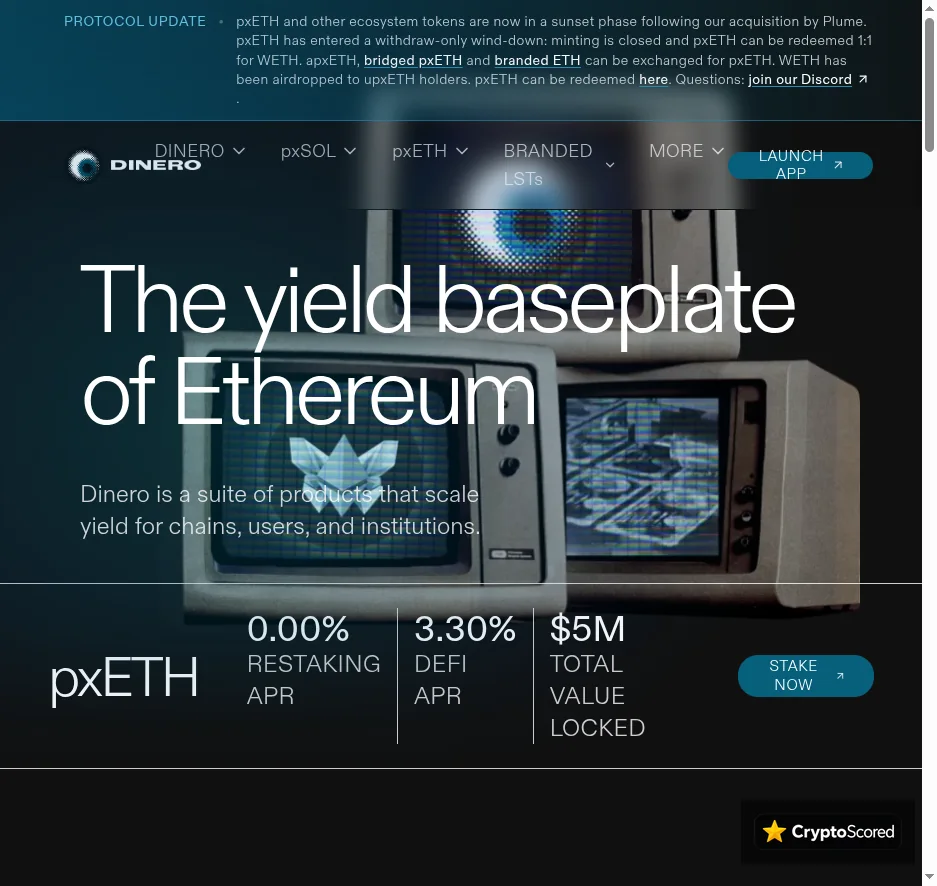
Dinero's pxETH is a close comparison, but it separates liquidity from yield. pxETH remains ETH-pegged and liquid, while a holder deposits it into Dinero's rewards vault to receive yield-bearing apxETH. Lido puts pooled staking rewards directly into stETH, with wstETH as its non-rebasing wrapper.
Solo staking remains the route for a holder who wants to run a validator and receive its direct rewards. It avoids Lido's pooled token and governance dependencies, but requires the validator deposit and ongoing operating responsibility that Lido's operator network takes on.
Contact Information
- Website
- https://lido.fi/
- Help center
- https://help.lido.fi
User Reviews
No reviews yet. Be the first to review this platform.
Other Liquid Staking Protocols




Explore the Crypto Directory
Discover exchanges, wallets, casinos, mining, trading tools and more.