
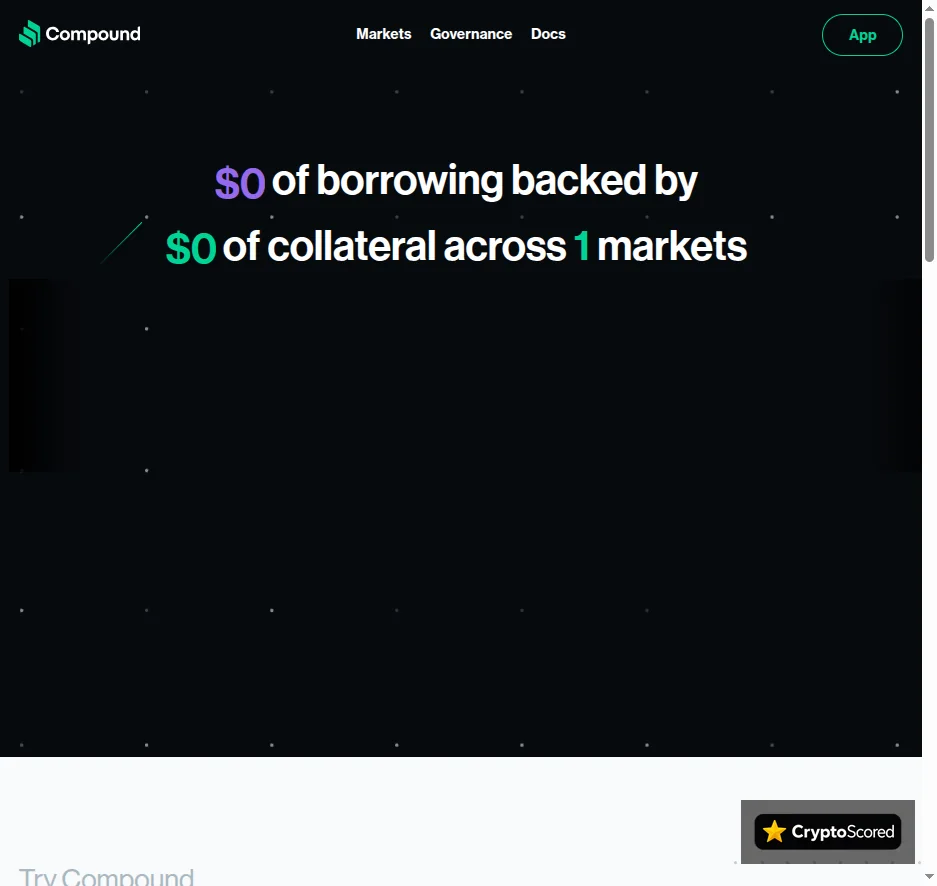

Compound
DeFi Lending Protocols →A pool-based lending protocol with variable interest rates and collateral-based liquidations.
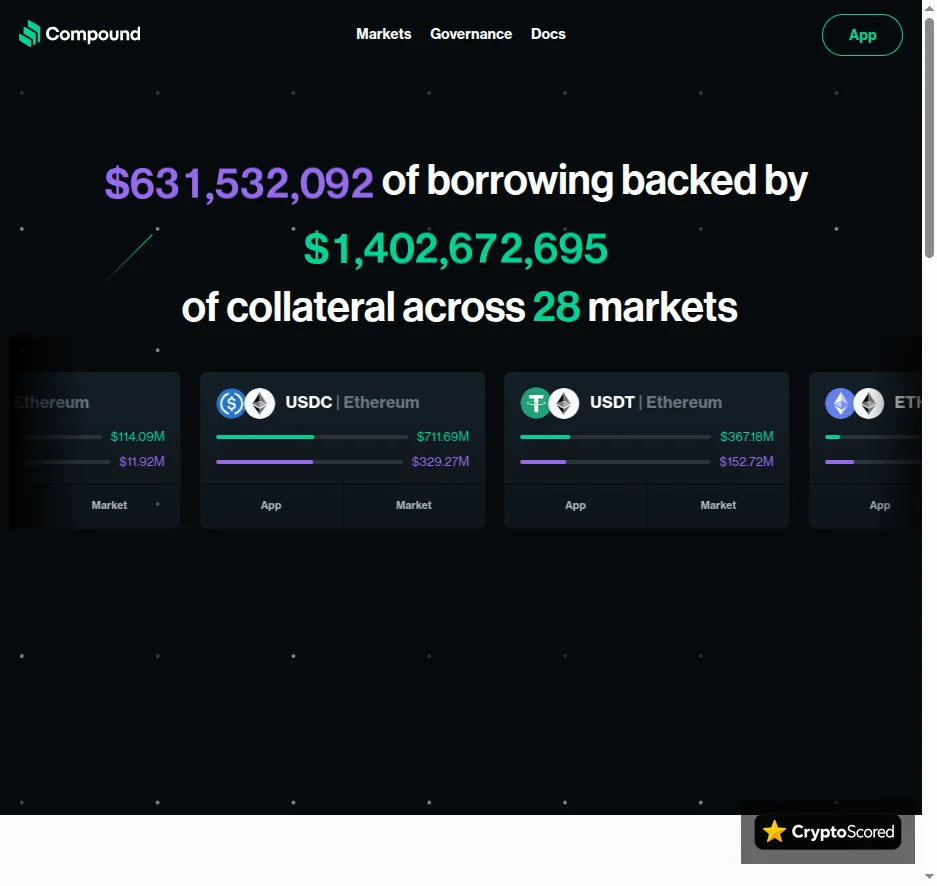
Verified Facts
- Lending · Market Model
- POOL
Platform overview
Compound III is an EVM-compatible lending protocol built as separate markets with one borrowable base asset and a defined set of collateral assets. It suits users who want a specific base-asset lending or borrowing market and accept the collateral list, caps and governance-set risk parameters for that market.
One market, one interest-bearing base asset
In each Compound III market, users supply the base asset to earn the supply rate or post supported collateral to borrow that same base asset. The market is deliberately asymmetric: the base asset is the only asset borrowers draw and the only deposit that earns that market's supply interest.
Other listed assets are collateral, not alternative yield-bearing deposits within the same market. A holder choosing between supplying the base asset for yield and posting another asset to borrow is taking two different roles, rather than selecting between two versions of the same deposit.
Collateral factors limit new borrowing before liquidation
Borrow collateral factors determine how much value each collateral asset contributes to a new base-asset borrow, and supply caps limit the protocol's exposure to each collateral type. An account cannot increase its debt beyond the amount those factors permit; it must add collateral or reduce the borrow first.
Liquidation collateral factors sit higher than borrow collateral factors, leaving a buffer between losing capacity to borrow more and becoming eligible for liquidation. When a position is liquidatable, an external caller can absorb it: protocol reserves repay the debt and take the collateral, leaving the former borrower without remaining debt and, where value allows, a residual base-asset balance.
Utilization rates and reserves shape each market
Base-asset supply and borrow rates use separate utilization-based curves set by governance. Both rise as demand for the borrowable base asset grows and steepen above a configured kink, connecting the cost of borrowing and supplier return to the same market utilization.
Reserves come from the spread between borrower and supplier interest as well as liquidation activity. When reserves are below target, liquidators can buy absorbed collateral at a discount with the base asset, which replenishes reserves and makes collateral sales part of the liquidation design rather than a separate lending feature.
Governance-managed markets rather than universal deposits
COMP holders and delegates can propose and vote on market changes. The Timelock can adjust rate curves, collateral factors, supply caps, price feeds and upgrades, so a market's asset list and risk settings are governance-managed. Deployments and configurations are also chain-specific across EVM networks.
Aave V3 is a close alternative for wallet-based overcollateralized lending because supplied assets can earn interest and may also serve as collateral. Morpho Blue instead uses permissionlessly created isolated markets pairing one loan asset and one collateral asset. Compound III keeps several approved collateral assets behind one governance-managed base-asset market.
Contact Information
- Website
- https://compound.finance/
- Public-contact status
- No public contact verified on the current official surface
User Reviews
No reviews yet. Be the first to review this platform.
Other DeFi Lending Protocols





Explore the Crypto Directory
Discover exchanges, wallets, casinos, mining, trading tools and more.